
How to Measure a Lampshade for the Right Fit
Even a lampshade that technically “fits” on your lamp, it can still feel wrong in a room. The proportions may look off. The bulb may show from certain angles. The shade might sit too high on the harp or overwhelm the lamp base entirely.
Most of these problems are not caused by poor craftsmanship or low-quality materials. They come down to proportion, scale, and understanding how lampshade dimensions interact with the shape of the lamp, the surrounding furniture, and the way light moves through a space.
That is why replacing a lampshade is often more complicated than simply matching the old measurements. Two shades with similar dimensions can create completely different visual results depending on their height, shape, fabric, and fitter style. A shade that looks balanced in a showroom may feel oversized on a bedside table or visually heavy in a smaller room.
Designers pay close attention to these relationships because lighting affects far more than illumination alone. The right shade can soften a seating area, improve visual balance, hide exposed hardware, and make a lamp feel intentional within the room rather than simply functional.
Understanding a few core measurements and proportion guidelines makes the selection process far more predictable, whether you are replacing a worn shade or refining the look of an entire space.
Know the Three Lampshade Measurements
Most lampshade sizing starts with three basic measurements: top diameter, bottom diameter, and height (often called slant height). These are listed in a standard format that appears in nearly every product listing.

Most lampshades are listed using this standard format: TOP x BOTTOM x HEIGHT
For example:
The width across the top opening of the shade.
The widest visible part of the lampshade.
Typically measured along the slant of the shade, not straight up.
The order matters because two shades with the same bottom width can look completely different depending on the top opening and height.
One common source of confusion is height measurement. Many tapered shades are measured along the slant, not vertically. If you measure straight up instead of along the side, your replacement shade may end up noticeably shorter than expected.
Before ordering a replacement, it helps to measure the existing shade carefully rather than relying on memory or old product descriptions.
Find the Correct Top and Bottom Diameter
The bottom diameter is usually the most visually important measurement because it determines how wide the shade appears on the lamp.
A shade that is too narrow can make the lamp look top-heavy or expose the hardware underneath. A shade that is too wide may overpower the lamp base or feel visually bulky in smaller rooms.
As a general guideline, the shade width is often about twice the width of the lamp base at its widest point, and the bottom edge of the shade should generally extend beyond the widest part of the base.
That said, proportion rules are not absolute. A slender ceramic lamp may work with a wider drum shade for a more contemporary look, while a traditional turned wood base may feel more balanced with a tapered empire shade.
The top diameter matters too, especially on tapered shades. A very narrow top opening changes the silhouette and can affect how light is directed upward.
When replacing an existing shade, measure:
- Across the top opening
- Across the bottom opening
- From edge to edge, not along the curve
Even a difference of one or two inches can noticeably change the scale of the lamp.

Get the Lampshade Height Right
Height is one of the most overlooked sizing decisions.
Customers often focus on width first, then discover the bulb, socket, or harp remains visible once the shade is installed.
A properly sized shade should typically hide:
- The bulb socket
- The lamp hardware
- Most of the harp assembly
If the shade is too short, the bulb may glare directly into the room when seated nearby. This is especially noticeable on bedside lamps and living room table lamps positioned near eye level.
A shade that is too tall can make the lamp feel visually compressed, the base may disappear beneath the shade, or the proportions of the piece may feel heavy or outdated.
For many table lamps, the shade height is approximately one-third of the total lamp height. But visual balance matters more than strict formulas.
Tall, narrow lamp bases often benefit from slightly taller shades, while wide sculptural bases may need shorter proportions to avoid feeling oversized.
This is also where material choice affects perception. Darker fabrics and opaque materials can make a shade feel visually heavier, while lighter linens and translucent materials often feel more open and airy even at larger sizes.
Choose the Right Shade Shape for Your Lamp
The shade shape should relate to the shape of the lamp base, not compete with it.
This is where many replacement purchases go wrong. Customers may correctly measure dimensions but select a silhouette that clashes with the lamp itself.


Drum Shades
Clean-lined and contemporary. Often paired with:
- Cylindrical bases
- Modern ceramic lamps
- Sculptural forms
- Transitional interiors
Empire Shades
Tapered and traditional. Common with:
- Urn-shaped bases
- Turned wood lamps
- Classic brass lamps
- Traditional interiors
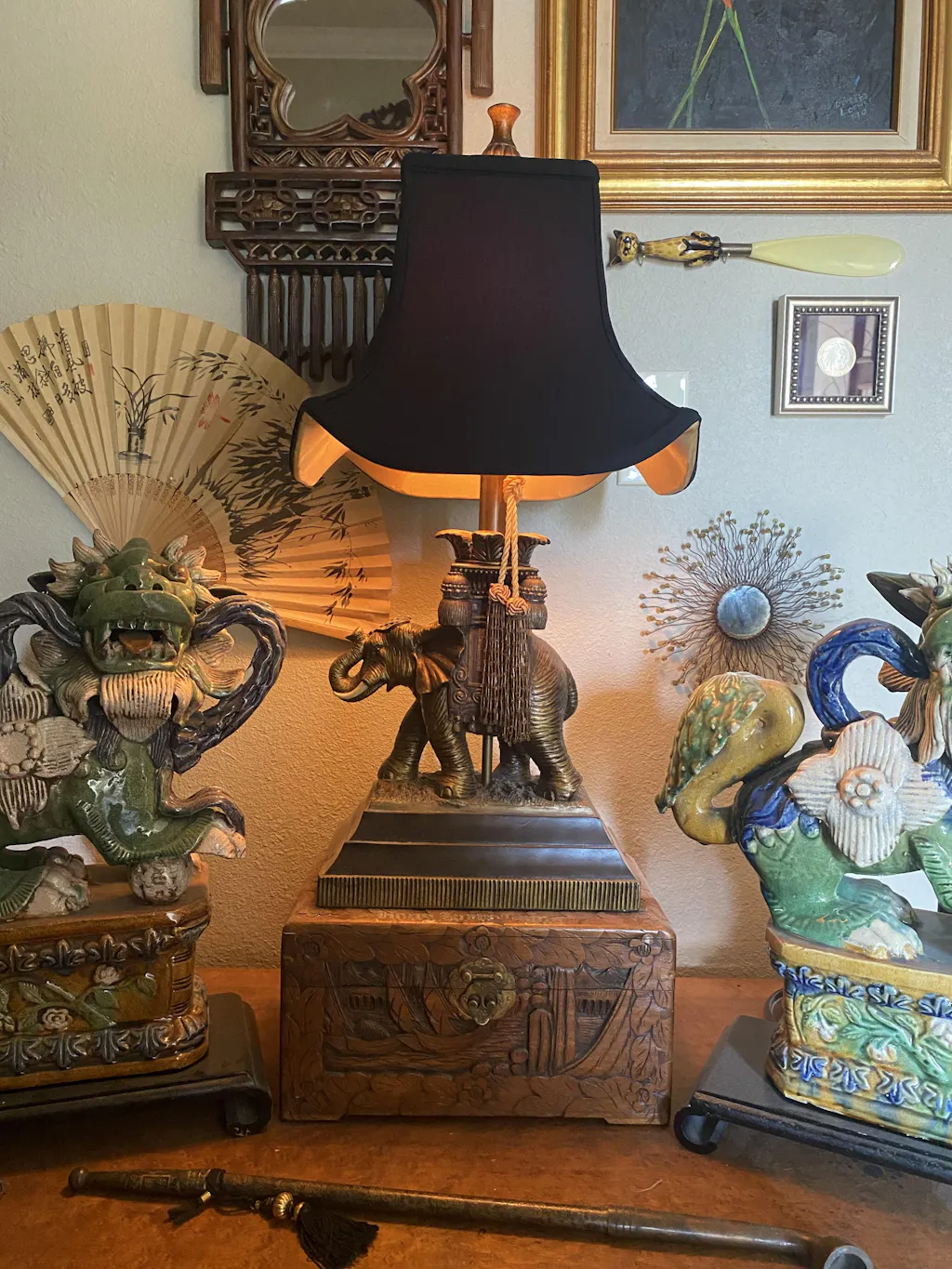
Coolie or Bell Shades
More decorative silhouettes that work well on:
- Vintage lamps
- Accent lighting
- Decorative statement pieces
The shape also affects light distribution. Drum shades tend to distribute light more evenly outward, while tapered shades can direct light downward more softly.
For designers, shape selection is often less about rules and more about visual intent. A dramatically oversized drum shade may work beautifully in a contemporary interior even if it breaks traditional proportion guidelines.
Check the Harp and Fitter Before Buying
Many sizing issues are actually hardware issues. Before purchasing a replacement shade, identify the fitter style attached to the lamp.
Spider Fitter
The most common fitter for table lamps. Designed to sit on top of a harp and secure with a finial.
Uno Fitter
Attaches directly to the lamp socket rather than using a harp. Often used with floor and accent lamps.
Clip-On Fitter
Clips directly onto the bulb, often used for smaller accent lamps or chandeliers.
Customers frequently assume these fitters are interchangeable, but they are not.
Another common issue is harp height. Even the correct shade can sit awkwardly if the harp is too tall or too short.
If the shade floats too high above the base, the bulb remains visible, or the proportions feel off, the harp may need adjustment rather than the shade itself.
This is especially important when replacing older lampshades on vintage lamps, where hardware standards may differ from current production.
Balance Lamp and Shade Proportions
Good lampshade sizing is partly technical and partly visual.
Two lampshades with identical measurements can feel completely different depending on fabric, color, opacity, trim, shape, and the scale of the room.
For example:
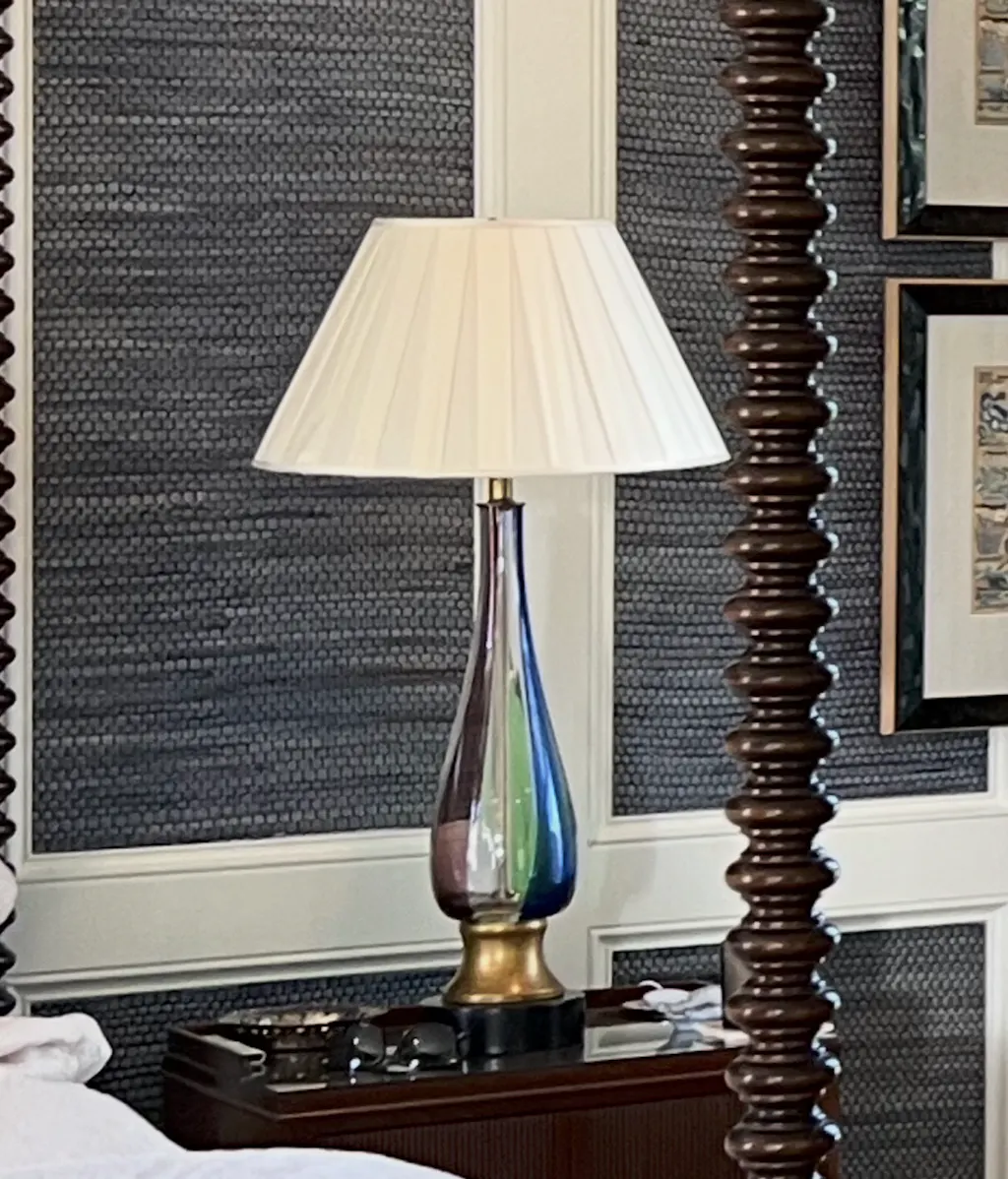
A crisp white linen drum shade often feels visually lighter than a dark silk shade of the same dimensions. A tall, tapered shade may visually elongate a lamp, while a wide drum shade can create a more architectural presence.
Interior designers often adjust lamp shade sizes to fit the space and overall look of a room. Larger shades can help oversized furniture feel softer and more balanced, while narrower shades usually work better in tighter spaces like bedside tables. Lower-profile shades are also useful when designers want to keep sightlines open and avoid blocking other layers of lighting.
This is why measuring should not be separated from the design context. The "right" shade is not only the one that fits physically — it is the one that feels balanced within the room.
Replace an Old Lampshade Without Guesswork
If you already have a lampshade that mostly works, replacing it becomes much easier. Start by measuring the top diameter, bottom diameter, slant height, and fitter type. Then, evaluate what is not working about the current shade.
Ask questions like:
- Does the bulb show?
- Does the shade feel too large or too small?
- Is the room too dim?
- Does the lamp feel visually heavy?
- Does the shade sit too high on the harp?
This approach helps avoid repeating the same sizing problem with a new purchase.
It is also important to recognize when a standard replacement size may not be ideal. Antique lamps, imported lighting, and custom bases often fall outside typical sizing conventions.
In those situations, semi-custom or fully custom lampshades can provide better proportions and a more resolved final look than trying to force a stock size to work.
Find Designer-Quality Lampshades at Lux
A lampshade can completely change how a lamp feels in a room. The right proportions can soften heavy furniture, reduce glare at eye level, improve light distribution, and create cleaner visual balance throughout the space. Small adjustments in height, shape, fabric, or opacity often create a far more refined result than replacing a shade based on measurements alone.
At Lux Lampshades, sizing is treated as part of the overall design process rather than a standalone measurement exercise.
In addition to stock lampshades, we offer semi-custom and fully custom options that help designers and homeowners solve proportion, material, and fit challenges that standard sizes cannot always address.
Explore Lux’s collection of handcrafted lampshades and pendant lighting, or connect with our team to discuss custom sizing, COM options, and designer trade support.
Explore Lampshades